Overview
Search
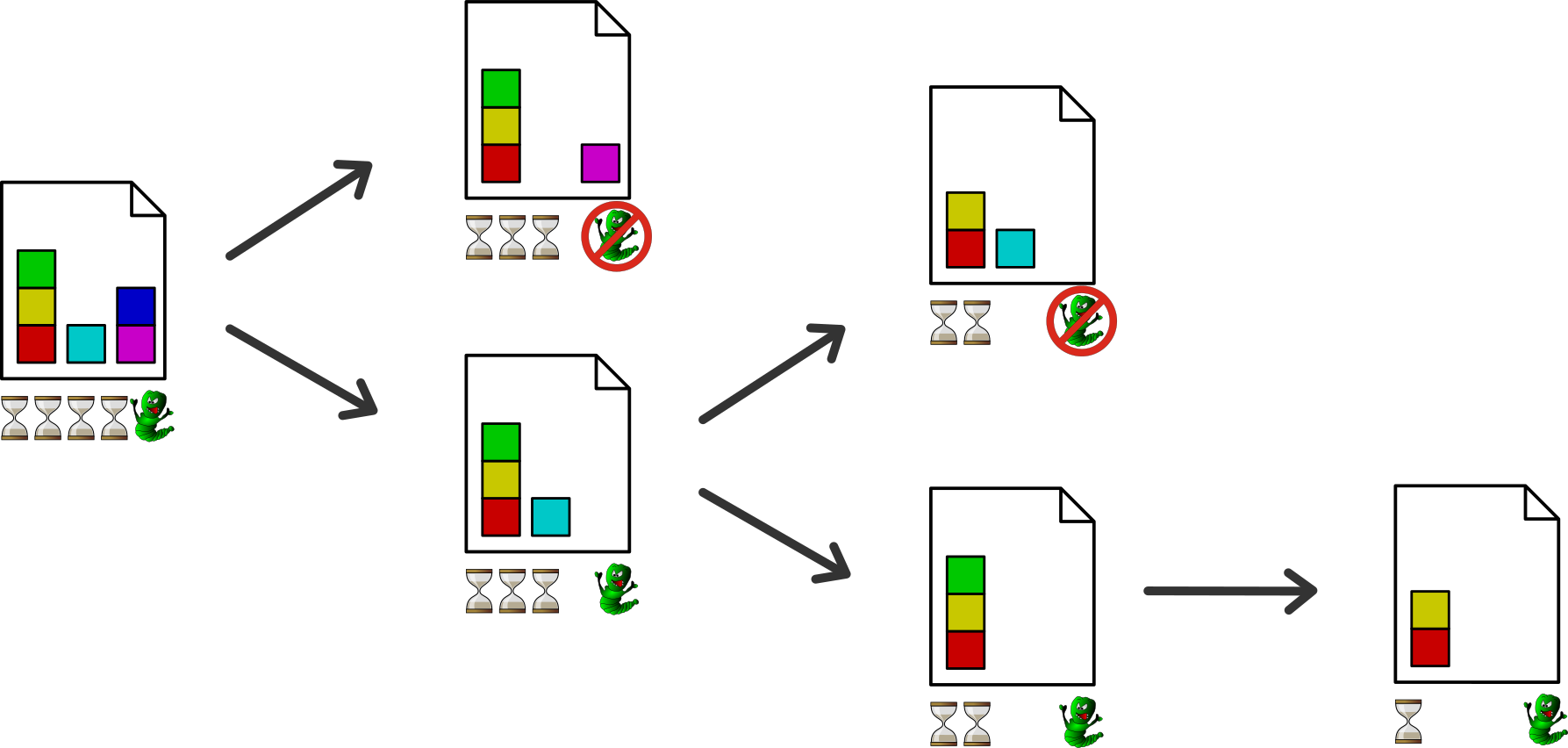
Machetli runs a hill-climbing search
Machetli runs a hill-climbing search in a space of instance transformations. This means that it starts with some instance (for example the instance where you observed a bug that you want to find) and modifies it in different ways to reach successors. It then evaluates successors to check whether the behavior in question is still present. If it is, Machetli’s search continues from this instance. The search continues like this until no successor exhibits the behavior any more.
States

A state represents an instance
Machetli stores modified instances in states which are simply Python
dictionaries containing the instance. You must define an initial state from
where the search is started. The packages machetli.pddl and
machetli.sas provide functions for this.
If you plan to extend Machetli to a new file type, you can store whatever information you want in a state.
Successor Generators
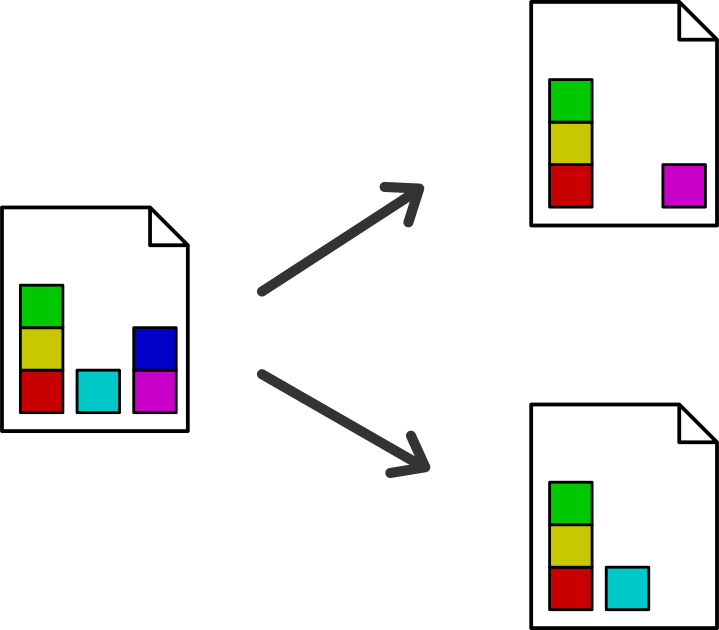
Successor generators modify the instance
Successor generators yield modified versions (successors) of a given state. Modifications to the state can be anything from manipulations of internal data structures to changes in program inputs.
The packages machetli.pddl and machetli.sas provide a collection
of readily available successor generators for PDDL and SAS+ tasks but
you can also write your own.
Evaluators

Evaluating a state
Every state that is generated during the search will be evaluated to check if it still has the behavior you are looking for. This is done by an evaluator script, a Python script that exits with specific exit codes to indicate whether the behavior is still present. The main work in setting up Machetli for your use case is writing an evaluator script to reproduce the behavior you are interested in.